

What is F14 Grade Plywood and Why Do Builders Prefer It for Structural Projects?
F14 grade plywood is a high-performance engineered wood product manufactured from multiple thin hardwood veneer layers bonded with industrial-grade adhesives. The “F” designation confirms testing and grading by recognized authorities, while “14” represents its strength classification within the grading system.
Selecting appropriate plywood for structural building projects directly impacts safety, longevity, and project success. Inferior materials can lead to structural failures, costly repairs, and compromised building integrity. The right choice ensures compliance with building codes and provides reliable performance under load-bearing conditions.
Builders consistently choose F14 grade plywood for several compelling reasons:
- Superior plywood strength through alternating grain alignment that resists splitting and warping
- Consistent quality standards backed by rigorous testing and certification processes
- Optimal cost-performance ratio compared to premium grades without sacrificing structural reliability
- Versatile applications spanning flooring, wall sheathing, roofing, and temporary structures
- Enhanced moisture resistance through specialized treatments that prevent degradation
- Reliable load-bearing capacity supporting heavy equipment and fixtures without deformation
The combination of certified strength ratings, durability, and accessibility makes F14 grade plywood the go-to material for contractors seeking dependable structural solutions. Its proven track record across residential and commercial projects demonstrates why this specification remains an industry standard.
What Makes F14 Grade Plywood Structurally Reliable?
F14 plywood strength comes from its complex multi-layer construction that turns individual wood veneers into an engineering wonder. Each sheet is made up of several thin hardwood veneers—usually between 1.5mm and 3mm thick—glued together under high pressure and heat to form a single structural panel.
How Does the Veneer Layering Process Create Superior Strength?
The manufacturing process starts with carefully chosen hardwood logs that are rotary-peeled to create continuous sheets of veneer. These hardwood veneers go through strict quality control to ensure consistent thickness and minimal defects before being assembled. The veneers are then stacked in odd-numbered layers (typically 7, 9, or 11 plies) to maintain structural balance and prevent warping.
The key innovation is in the careful arrangement of these layers. Each veneer sheet is positioned with its wood grain running perpendicular to the adjacent layers, forming a cross-laminated structure that evenly distributes stress across the entire panel. This cross-grain configuration stops the plywood from splitting along a single grain line—a common weakness in solid timber boards.
Why Does Alternating Grain Alignment Matter for Structural Applications?
Grain alignment is crucial for F14 plywood’s outstanding performance qualities. When wood fibers run in the same direction, the material becomes prone to splitting and cracking along that grain pattern. The alternating orientation in F14 plywood creates a mechanical interlock that resists these failure modes.
This perpendicular arrangement provides three key benefits:
- Dimensional stability: The panel keeps its shape even with changes in humidity and temperature
- Multi-directional strength: Load-bearing capacity stays consistent no matter which direction the stress comes from
- Reduced expansion and contraction: Cross-grain layers counteract each other’s natural movement tendencies
The outer face veneers usually have their grain running parallel to the panel’s length, giving maximum bending strength for spanning applications like floor joists and roof decking. Interior layers alternate at 90-degree angles, forming a matrix that prevents delamination under sustained loads.
What Role Do Adhesive Bonds Play in Long-Term Performance?
How Does F14 Plywood Compare to Other Grades in Terms of Cost-Performance Balance?
The plywood grading system uses a combination of letters and numbers to communicate structural capacity and quality standards. The ‘F’ designation indicates the plywood has undergone formal testing and certification by recognized authorities, confirming it meets specific structural requirements. The number ’14’ represents the stress grade, measured in megapascals (MPa), which defines the material’s bending strength and load-bearing capabilities.
Understanding the Plywood Grading Hierarchy
Higher-grade options like F17, F22, and F27 offer increased structural capacity for demanding applications. F17 plywood provides approximately 21% more bending strength than F14, making it suitable for longer spans or heavier load requirements. F22 and F27 grades deliver even greater performance but come with substantially higher price points—often 30-50% more expensive than F14.
Lower-grade alternatives such as F11 and F8 cost less upfront but sacrifice structural integrity. These grades contain more natural defects, including knots, voids, and inconsistent veneer quality. The adhesive bonds may not withstand prolonged exposure to moisture or stress, leading to delamination and premature failure.
The F14 Sweet Spot
F14 grade plywood occupies the optimal position in the cost-performance balance for most residential and light commercial projects. It delivers sufficient structural capacity for standard building applications without the premium pricing of higher grades. The material handles typical floor joists spaced at 450mm centers, wall framing, and roof sheathing with appropriate support.
Cost comparison breakdown:
- F14 typically costs 15-25% less than F17 plywood
- Provides 40-60% better structural performance than F11 grade
- Maintains consistent quality across sheets, reducing waste from defective panels
- Requires fewer support members due to adequate spanning capabilities
Quality Differences That Impact Long-Term Value
The manufacturing standards for F14 grade ensure minimal defects that could compromise structural integrity. Each sheet undergoes quality control checks for veneer alignment, adhesive coverage, and thickness consistency. This attention to detail translates to predictable performance across different environmental conditions.
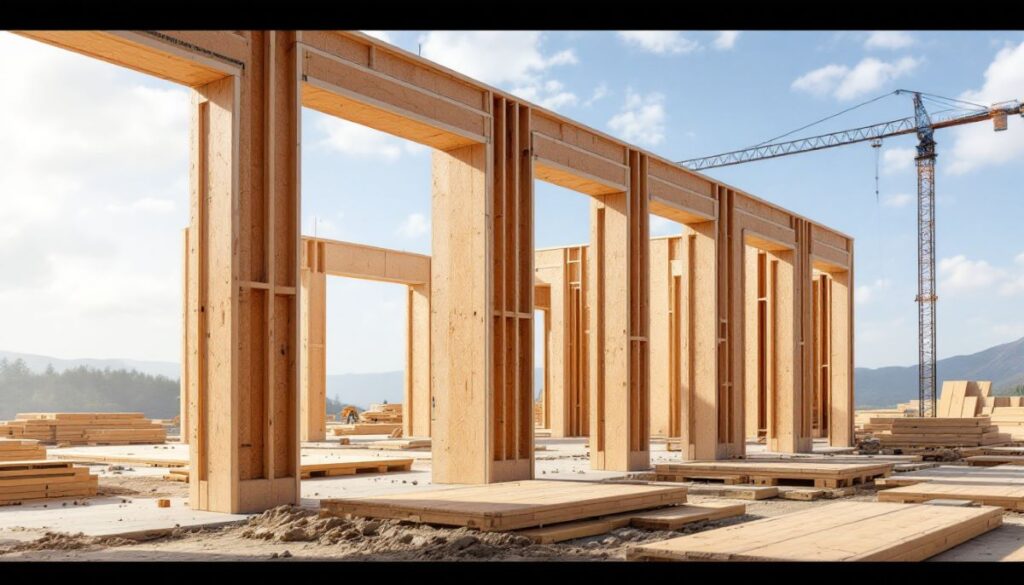
What Are the Key Physical and Environmental Properties That Make F14 Plywood Suitable for Various Structural Applications?
High density plywood like F14 grade delivers exceptional structural performance through its compact construction and uniform composition. The density typically ranges from 680 to 720 kg/m³, creating a solid material that resists compression and maintains dimensional stability under load. This consistent thickness across every sheet—whether 12mm, 17mm, or 19mm—eliminates weak spots that could compromise structural integrity during installation or throughout the building’s lifespan.
Physical Properties That Define F14’s Structural Capability
The tight bonding between veneers in F14 grade creates a material that won’t separate or delaminate when subjected to stress. Each layer compresses tightly against the next, forming a unified panel that distributes weight evenly across its surface. This characteristic proves essential when F14 serves as subflooring beneath heavy appliances or as roof decking supporting snow loads.
The smooth surface finish of F14 plywood reduces the need for extensive preparation work before applying final treatments. Manufacturers sand both faces to a consistent grade, removing splinters and irregularities that could interfere with paint adhesion or create uneven surfaces. This refinement saves time during construction while ensuring professional results in visible applications.
Environmental Resistance Through Strategic Treatment
Moisture resistance stands as a critical feature distinguishing F14 from untreated alternatives. The manufacturing process incorporates water-resistant adhesives that maintain their bond strength even when exposed to humidity or occasional water contact. This treatment prevents the swelling, warping, and rot that plague inferior materials in damp conditions.
Pest resistance comes from chemical treatments applied during production that deter termites, wood borers, and other insects. These preservatives penetrate deep into the wood fibers, creating a hostile environment for pests without compromising the material’s structural properties. The protection extends the service life of F14 plywood in environments where insect damage typically shortens material longevity.
Fungal resistance complements these protections by preventing mold, mildew, and decay fungi from colonizing the wood. The treatment creates conditions where fungal spores cannot establish themselves, maintaining the plywood’s strength and appearance in humid climates or poorly ventilated spaces.
How Is Sustainable Sourcing Enhancing the Appeal of F14 Plywood in Modern Construction?
Sustainable sourcing practices have transformed F14 plywood into a material that meets both structural requirements and environmental responsibilities. Modern manufacturers increasingly source hardwood veneers from certified forests managed under strict environmental protocols, ensuring that each sheet of F14 plywood contributes to responsible forest stewardship rather than deforestation.
The construction industry faces mounting pressure to reduce its carbon footprint, and environmentally conscious sourcing of F14 plywood directly addresses this challenge. Certified suppliers follow chain-of-custody documentation that traces wood from forest to factory, providing transparency about the material’s origins. This traceability allows builders to specify sustainable construction materials with confidence, knowing their projects align with green building standards like LEED and BREEAM.
Mechanisms of Environmental Impact Reduction through Responsibly Sourced F14 Plywood
Responsibly sourced F14 plywood reduces environmental impact through several mechanisms:
- Forest regeneration programs ensure harvested areas are replanted with native species
- Reduced transportation emissions when sourcing from regional suppliers
- Efficient manufacturing processes that minimize waste during veneer production
- Lower embodied energy compared to synthetic alternatives like steel or concrete
Evolving Adhesives for Sustainability in F14 Plywood Production
The adhesives used in modern F14 plywood production have evolved to support sustainability goals. Many manufacturers now employ formaldehyde-free or low-VOC adhesive systems that maintain structural performance while improving indoor air quality. These advances make F14 plywood suitable for health-conscious building projects where occupant wellbeing ranks as a priority alongside structural integrity.
Certification Schemes and Environmental Compliance for Builders
Certification schemes like FSC (Forest Stewardship Council) and PEFC (Programme for the Endorsement of Forest Certification) provide third-party verification of sustainable practices. F14 plywood bearing these certifications offers builders documented proof of environmental compliance, simplifying the process of meeting regulatory requirements and client expectations for sustainable construction materials. Check out more about What Is Formply and When Should You Use It in Australian Construction Projects?
Durability and Longevity: Amplifying the Environmental Benefits of F14 Plywood
The durability inherent to F14 plywood extends its sustainability credentials beyond initial sourcing. A material that resists moisture damage, pest infestation, and structural degradation requires less frequent replacement, reducing the cumulative environmental cost over a building’s lifecycle. This longevity means fewer resources consumed for repairs and renovations, amplifying the environmental benefits of choosing responsibly sourced materials.
Architects are now more inclined towards utilizing materials such as responsibly sourced F14 plywood due to its sustainability, durability, and overall alignment with modern eco-friendly construction standards.
What Are Some Best Practices When Working with F14 Grade Plywood?
Sharp blades are essential for clean, precise cuts that preserve the structural integrity of F14 plywood. Dull blades create ragged edges, splinter the veneer layers, and compromise the material’s strength at connection points. Using carbide-tipped circular saw blades or fine-toothed hand saws designed specifically for cutting techniques for plywood prevents delamination and maintains the panel’s engineered properties.
Preparing the Surface for Optimal Results
Sanding plywood finish before applying any coating dramatically improves both appearance and adhesion. Starting with 120-grit sandpaper removes minor surface imperfections and mill marks, while progressing to 220-grit creates the smooth surface necessary for stains, paints, or sealants to bond properly. This preparation step reveals the natural grain patterns and eliminates rough spots that could telegraph through finished surfaces.
The sanding process also addresses any slight variations in veneer thickness:
- Sand in the direction of the wood grain to avoid cross-grain scratches
- Use a sanding block or orbital sander for consistent pressure distribution
- Wipe surfaces with a tack cloth between grit changes to remove dust particles
- Pay special attention to cut edges where exposed layers may appear rough

Sourcing and Storage Considerations
Handling F14 plywood begins with proper storage immediately after purchase. Local lumber yards and online retailers stock F14 grade material, making it readily available for project planning. Store panels flat on level supports to prevent warping, keeping them elevated off concrete floors to avoid moisture absorption. Cover stacks with breathable tarps rather than plastic sheeting, which can trap condensation and compromise the moisture-resistant treatments.
Acclimate panels to the installation environment for 48-72 hours before cutting. This practice allows the material to adjust to ambient humidity levels, reducing the risk of expansion or contraction after installation.
Conclusion
Choosing high-quality materials is crucial for the success of any construction project. F14 grade plywood offers excellent value by combining strength with affordability, making it a smart choice for builders and contractors.
The advantages of F14 plywood as a structural building material include:
- Structural integrity from its multi-layered hardwood construction
- Cost-effectiveness that meets budget and performance needs
- Versatility for various residential, commercial, and specialty uses
- Durability with treatments against moisture and pests
- Sustainability through responsible sourcing
When looking at real-world performance, it’s clear why F14 Grade Plywood is the preferred choice for structural building projects. This material can support heavy loads without losing stability, withstand environmental challenges that weaken other materials, and stay consistent in size throughout its lifespan.
Builders who want long-term project success understand that the materials they choose upfront will affect maintenance costs, structural reliability, and client satisfaction. F14 plywood offers a strategic solution that balances quality and budget. Its proven success in different applications—such as flooring systems and wall assemblies—solidifies its reputation as a reliable structural material that provides a good return on investment.